
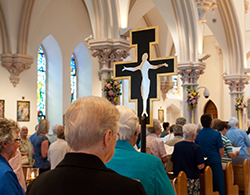





Anti-Polarization Campaign
Given the uncertainty, urgency, and crises of our time, we intend to respond to the needs of our world with a deeper and wider Franciscan lens. Through transforming our consciousness, both individually and collectively, we hope to implement change that creates collective transformation through a ripple effect of peace and harmony displayed in our prophetic actions and words. One way we can do this is by working to combat the polarization that is plaguing our world. Here are a few insights that we hope you will try.
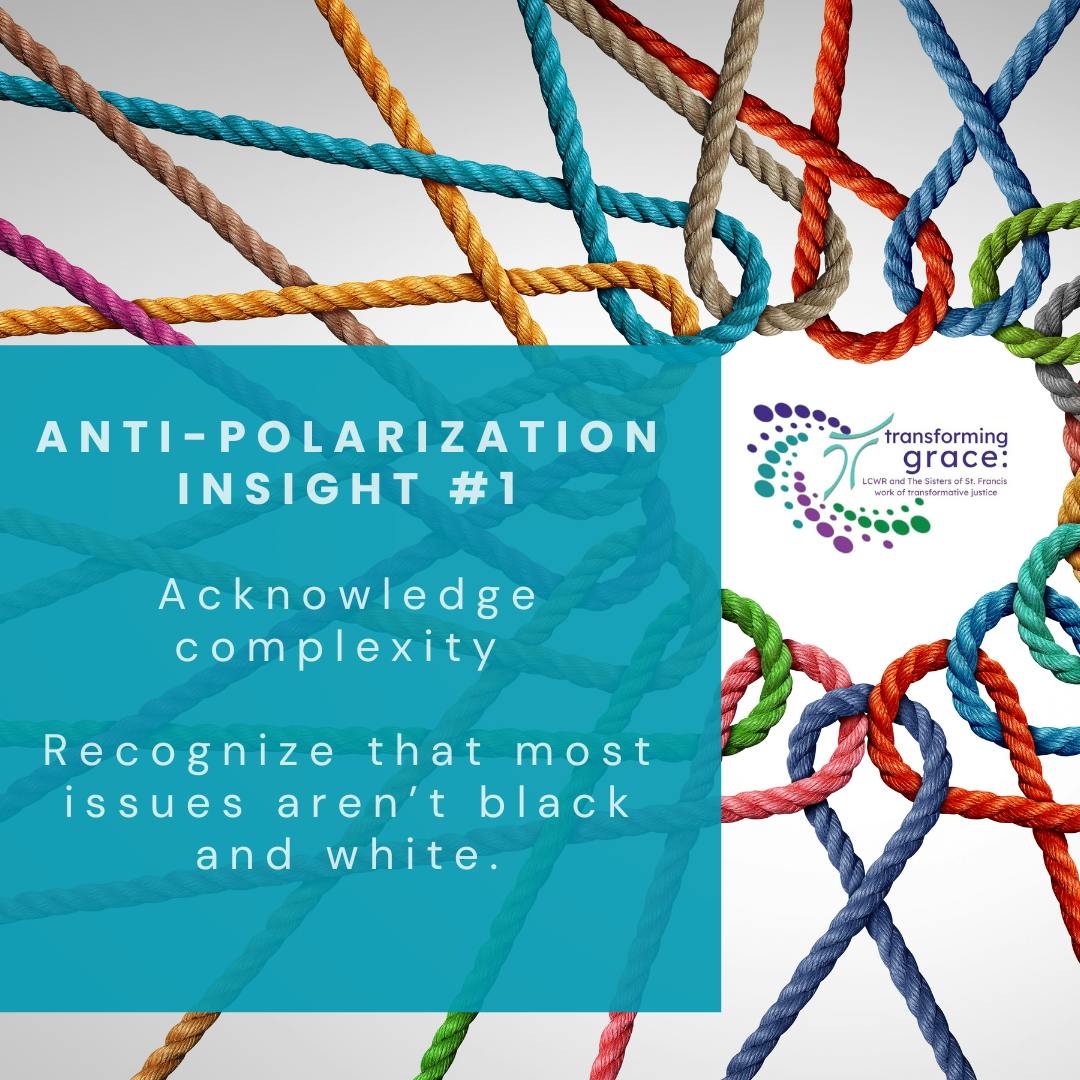
Life isn’t black and white – it’s a vibrant spectrum of grays, blues, and every color imaginable. The issues we face are just as complex. Before rushing to judgment, let’s take a moment to consider different perspectives. What nuances are we missing? What valid points might others have? Embracing complexity doesn’t mean abandoning our values. It means approaching challenges with open minds and seeking deeper understanding.
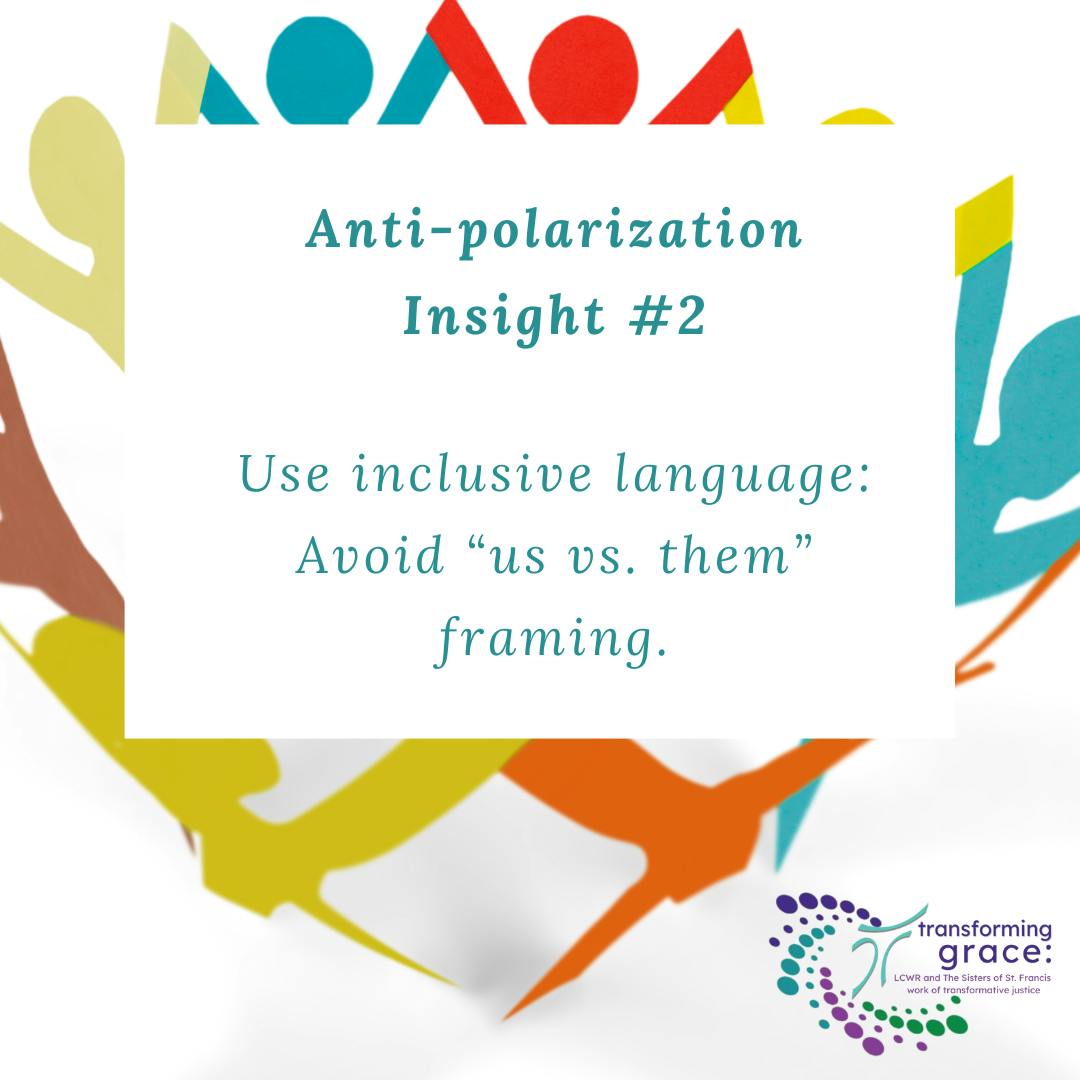
Words have power. When we say ‘us’ and ‘them,’ we draw lines that divide. Instead, let’s use language that brings people together. Try replacing ‘they always’ with ‘some people sometimes.’ Small changes in how we speak can open big doors to understanding. Inclusive language isn’t about censorship – it’s about creating space for everyone at the table. How can you make your words a bridge today?
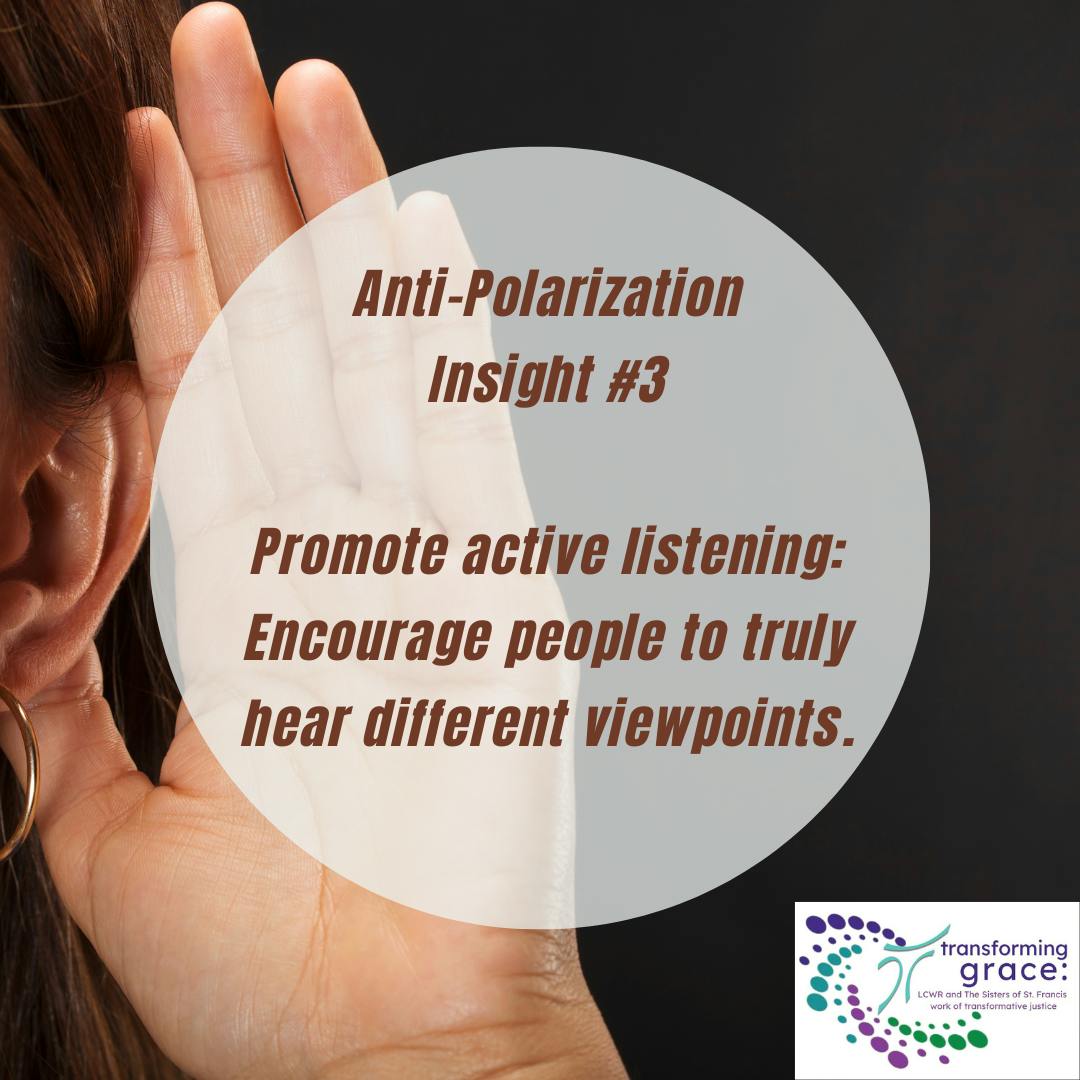
Ever catch yourself planning your response before someone’s finished speaking? That’s the opposite of active listening. Challenge: In your next conversation, focus entirely on understanding the other person’s perspective. Ask questions. Paraphrase to check your understanding. You don’t have to agree but aim to truly hear them. Active listening isn’t just polite – it’s a superpower for building empathy and finding solutions. Who will you listen to today?
Tired of endless debates that go nowhere? Let’s flip the script. Instead of dwelling on what’s wrong, ask: How can we make this better? Shift from blame to brainstorming. From complaining to creating. It’s not about ignoring problems but channeling that energy into finding solutions. Next time you’re in a heated discussion, try saying: ‘I hear your concern. What do you think we could do about it?’ You might be surprised how quickly the mood changes. What problem will you tackle constructively today?
Behind every opinion is a person with hopes, fears, and experiences that shaped their views. Next time you strongly disagree with someone, pause. Remember they too have loved ones, face daily struggles, and want a better world—even if their idea of better differs from yours. We’re all human, trying to navigate a complex world. Disagreement doesn’t erase our shared humanity. Challenge: Find one thing in common with someone you usually oppose. It might just change the conversation.
Power move: Use “I” statements to express your views. Instead of “You’re wrong about X,” try “I see X differently.” Rather than “That’s a terrible idea,” say “I have concerns about that approach.” “I” statements own your perspective without attacking others. They invite dialogue instead of defense. Bonus: They often lead to more productive conversations. How might your toughest talks change if you led with “I think” or “I feel?”
“All [group] are [negative trait].” Sound familiar? Generalizations may feel satisfying, but they rarely reflect reality. They oversimplify complex issues and unfairly label diverse individuals. Instead, try focusing on specific behaviors or policies you disagree with. For example, replace “People these days are lazy” with “Some workplaces struggle with employee engagement.” It’s more accurate and opens the door to actual solutions. Challenge: Catch yourself when you generalize. How can you make your statement more fair and specific?
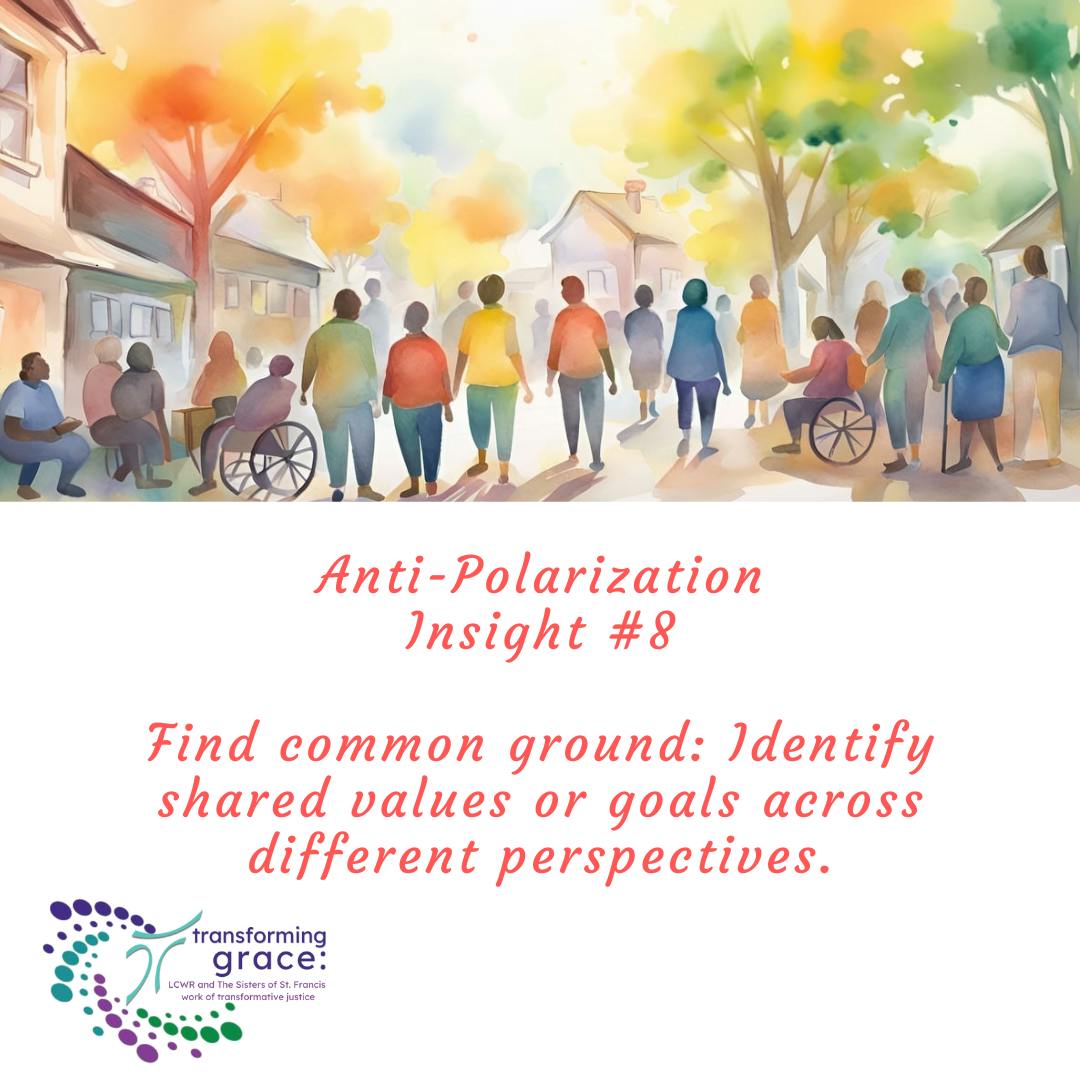
Beneath our differences, we often share more than we realize. Whether it’s wanting the best for our families, hoping for a cleaner environment, or desiring fair opportunities – common goals unite us. Next time you disagree with someone, try asking: ‘What do we both want to achieve here?’ You might be surprised by the overlap. Finding common ground isn’t about compromising values; it’s about discovering shared hopes. Let’s build bridges, not walls.

